Wednesday, 7 June 2017

The taking of Messines Ridge

'Daddy Plumer'
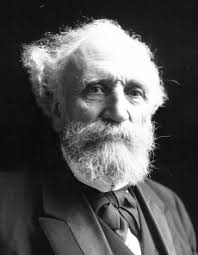
Orpen's portrait of General Sir Herbert
Plumer, architect of the Messines victory.
The dramatic success at Messines ridge in June 1917 was sandwiched between the attritional carnage of the Nivelle Offensive and the forthcoming nightmare of Passchendaele – a thin but satisfying filling to a very tough sandwich for the longsuffering British army and public.
Released from slavish adherence to Nivelle’s plans, Haig was able to resume planning for his own favoured approach to winning the stalemate of the Western Front (but for Verdun, and Joffre’s insistence on the joint offensive at the Somme he might even have pressed for it in 1916). The plan was a good one on paper, and if successful would bring three major gains to the Allied cause. Firstly, advancing as far as possible north eastwards from Ypres, through Passchendaele, along the Belgian coast towards the Dutch border would liberate large areas of occupied Belgium – a likely key factor in any future cease fire negotiation. It would also put an end to two vital U-boat bases at Zeebrugge and Ostend. Finally it would allow the Allies to attack and weaken the German main lines of communication to their front in northern France. But of course it would not be easy. The high ground on the southern aspects of the salient would need to be captured first. The Germans were aware of the risks and had made the usual formidable defensive preparations. The Arras campaign in support of Nivelle had delayed Haig, and with German reinforcements able to move from the Eastern front (where internal chaos in Russia had nearly closed down the front), time was of the essence.

The nose of the Ypres salient had been appreciably flattened since the first battle line were redrawn after Ypres 1 in October 1914. Most of this occurred during Ypres 2 in 1915, but periodic actions since then meant that the easternmost point was now at Hooge, only two miles from the town centre. From here, southwestwards, ran the shallow slopes that would be the focus for the attack. From Mount Sorrel (south of Hooge) the Messines ridge ran past Hill 60 (see Post 30/05/2015), westward round St. Eloi; then to the west of Wytschaete the ridge turned south, running west of Messines (Mesen) itself before sloping down to the bed of the river Lys – in this area the border between Belgium and France (see map).
The Battle for Messines Ridge 7th June 1917
The weight of assault was to fall along these six miles from Mount Sorrel to just south of Messines. The task was allocated to the Second Army, commanded by Sir Herbert Plumer, one of Britain’s more successful WW1 generals. An impressively visible leader, Plumer was popular with his officers and men, and the troops referred to him as ‘Daddy Plumer’ or ‘Old Plum and Apple’. He was promoted to command the Second Army after a strong performance at Ypres 2. Since that time there had been no major action along this section, and Plumer had had ample time to marshal his men and develop his plans to regain the high ground south of Ypres. His tactics were nothing short of sensational. From mid 1915 he had authorised extensive mining operations along the front, utilising the deep clay stratum, and employing the best miners and engineers that could be procured. More than two dozen main tunnels were dug, ending in galleries deep beneath the German positions. These they stuffed full of high explosive (ammonal, also used at the Somme) before the fateful day. Some of the galleries were in place and ready by mid-1916. German counter-mining efforts were less successful, but led to an underground war in both senses of the word. Plumer’s artillery and infantry preparations were planned with equal meticulousness. Following the detonations, the infantry were to rush what remained of the German first and second lines, sheltered behind a creeping artillery barrage. Plumer organised his assault forces into three groups. From Mount Sorrel to Wytschaete General Morland’s 10th Corps would strike south east to the ridge. Two other corps the 9th (led by General Hamilton-Gordon) and the 2nd Australian (led by General Godley) would strike east from Wytschaete to south of Messines.
The German defences were daunting, and after the Somme bombardment they must have been confident of withstanding any amount of shellfire. The Army Group was commanded by Crown Prince Rupprecht, on the Western Front since the first shots of the war. His two senior general were von Armin and von Below, also very experienced (the latter being the cousin of Fritz von Below, supremo of the German defence at the Somme. Their first line of trenches followed the upper ground of the ridge, creating a reverse ‘min-salient’ for this section. They built very strong 3rd and 4th lines across the base of this salient, running through Oosttaverne to the east of Wytschaete. This village was a key objective for the British. The Germans knew what was coming – they just were not sure when and how.
Once Haig was able to resume his focus on Flanders, preparations accelerated. While the subterranean galleries were completed and packed with explosives, an absorbing air battle took place in the skies. Both sides now had more, and greatly improved, machines, but generally the British held air superiority and prevented German planes from getting close enough to see the preparations. From the last days of May the British began a remorseless bombardment that leveled any remains of the villages of Wytschaete and Messines and surrounding woods. The Germans responded with counter barrages from deep positions, and the days leading up to zero hour (7th June) were loud and chaotic. Then, on the evening of 6th, a gigantic storm engulfed Flanders and it seemed that yet again the weather would intrude on Haig’s plans. But around midnight the skies cleared and zero hour was confirmed for 3.30am, the early dawn of high summer. At this point over one million pounds of ammonal had been packed into 24 galleries – 19 of them on the designated front line. At 3.30 all but one detonated simultaneously (the last one exploded in 1955!). The result was the largest man-made explosion in history – only exceeded at Hiroshima 28 years later. It was clearly heard across southern England and Wales, even in Dublin. At the site the devastation was unprecedented. The whole crest of the Wytschaete Messines ridge disappeared. It was estimated that 10,000 Germans, and all they occupied, were obliterated. Thousands of men from both sides - well away from the explosion -were, nevertheless, incapacitated by the force of the blast. Eighty years later the term ‘shock and awe’ was coined by the American military. There could be no more graphic example.
The British artillery began its creeping barrage, and as the infantry scrambled up the craters and slopes to the new ridge, they found the German first positions completely destroyed. By noon they had reached Oosttaverne and by the end of the day attained all of their objectives. The Australians were north east of Messines; and the Ulsters and Cheshires of the middle group reached’Hell Farm’, east of Wytschaete. The northern approach by 10 Corps found Mount Sorrel and Armagh wood completely destroyed but then had a hard days fighting before capturing their objective, Battle wood.
The day had been an outstanding success, and a great triumph for Plumer’s planning. The losses were only 500 (sic) but the German estimates were well in excess of 10,000 – a complete reversal of the Somme day 1 outcomes. The action continued for five more days to achieve the final line shown on the map. Plumer’s tactical victory was perhaps matched on the western Front throughout the war only by Nivelle’s late victory at Verdun. Fortunately for Plumer (and the Allied cause) he did not suffer Nivelle’s Icarus style demise.

Thereafter diversionary British attacks to the south were designed to draw attention away from the follow up breakthrough towards Passchendaele, to which we will return.

Saturday, 13 May 2017

The Second Battle of the Aisne


The soubriquet ‘Nivelle’s Offensive’ includes the Battle of Arras, covered in the preceding post, but its infamous connotations rest with his own main battle – the Second Battle of the Aisne. We have already covered Nivelle’s extraordinary rise to the top of the French military tree (See Post 18/4/17).

His decline started almost from the moment of his appointment by Prime Minister Briand in December 1916, and ended even more precipitately, with a posting to Africa less than six months later. From the outset the misgivings of more experienced generals about his plans led politicians to doubts, and Nivelle found himself having to justify his confidence repeatedly. At one point he offered to resign, and his ‘back me or sack me’ tactic held off the doubters - that, and his undertaking to call it off if not decisive in 48 hours. However, matters took a serious turn when Briand’s patched up government fell apart in late March.
Alexandre Ribot
Prime Minister 1917
The new premier was Alexandre Ribot, a brilliant academic taking his second bite at the prime ministerial cherry (his first had lasted only a few days, coming just before the outbreak of war in 1914). He chose a fellow academic as his Minister for War, Paul Painlev
é, an extraordinary man – dazzling mathematician; first passenger in an airplane in France (piloted by Wilbur Wright in 1908), and subsequently prime minister three times himself. Painlevé’s studious approach rubbed up against Nivelle’s bravado, and was much more in tune with that of his friend General Philippe Pé
tain. These frequent challenges (added to the detailed rehearsals that were a feature of Nivelle’s planning, and the loss of documents to German trench raids) undermined security seriously. It was later said, darkly, that by the time the offensive began in April, every waiter in Paris knew the details of Nivelle’s plans.


The first Battle of the Aisne, fought in the breathless days of September 1914, when the German juggernaut had been reversed by the Battles on the Marne to the south (See posts 27/12/2014 and 30/12/2014), had signalled the start of trench warfare. The Germans had retreated until they found near impregnable positions on high ground to the north of the River Aisne. This had then led to the efforts to outflank each other that became the race to the sea. Three years and millions of casualties later, the German positions had become, if anything, more formidable, and yet Nivelle saw this part of the front as suitable for the breakthrough that would roll up the German armies in the Noyon salient, starved of communications.
The 1914 battle had taken place in crossings of the river and up the steep northern slopes, predominantly between Soissons and Berry-au-Bac. This time the attack was on a wider front (of over 50 miles) from Laffaux in the west to Monvilliers, north east of Reims, and its centre of gravity was further east (see map). But the aim remained to capture the high ground along the Chemin des Dames, and to break through the Craonne plateau and to the plain of Laon, heading north towards Haig and Franchet d’Esperey’s forces at either end of the Siegfried line.
Nivelle’s grand victory plan involved reorganising his army groupings to create a central group under General Micheler. Micheler replaced the sceptical Pétain who was promoted sideways (not for long). The central group had four armies, each under command of a Nivelle devotee. From west to east these were: the 6th, under his enforcer Mangin (Vauxaillon to Hurtebise); the 5th, under Mazel (Hurtebise to Reims); the 4th, under Antoine (east Reims to Moronvilliers), and the 10th, under Duchesne (in reserve). The plan required Mangin and Mazel to strike hard on day 1, and on day 2 for Anthoine to launch from the east against the stretched German flank. Not since the Marne had the Germans been attacked on such a wide front. Nivelle’s expectation was they would already be seriously weakened by Haig’s assault at Arras and another attack by Marne veteran general Franchet d’Esperey at St Quentin, the southern end of the Siegfied line.
A bold, grand plan it may have been, but it was riddled with flaws and doomed from the start. Firstly, although Haig’s forces did well at the northern end of the Siegfried line, Franchet d’Esperey could make no impact at the southern end. Secondly, as mentioned, the Germans were prepared for every move and gambit. Thirdly, Nivelle and his generals (Mangin in particular) made completely unrealistic demands of their already weakened and demoralized troops, paying little regard to the difficult terrain and fortifications they would have to overcome. Likewise with tanks, Nivelle committed the bulk of France’s force to unsuitable terrain althoguh, unlike the poilus, the new Schneider tanks were untested and unreliable. Fourthly, and unforgivably, Nivelle had no appreciation of the strength of the German positions. Like Rawlinson at the Somme, he assumed that the weight of his attack would overcome any obstacles with ease. When warned that Germans were moving reinforcements to anticipate his attack, he responded that the more Germans there, the greater the victory – astonishing with the experience of the Somme first day only months earlier; unbelievable, with 100 years hindsight. Especially on the chalky heights above the Aisne, the Germans had utilised all of their defensive ingenuities in strengthening well know defensive positions, including the Forts at Malmaison and Brimont. Churchill wrote of this state of affairs:
                "So Nivelle and Painlevé found themselves in the most unhappy positions that mortals can occupy: the Commander having to dare the utmost risks with an entirely sceptical chief behind him; the Minister having to become responsible for a frightful slaughter at the bidding of a General in whose capacity he did not believe, and upon a military policy of the folly of which he was justly convinced. Such is the pomp of power"

Paul Painleve
War Minister 1917
And so the prelude to this particularly French drama began on 6th April, with the artillery drum roll along more than fifty miles of front. The civilian populations of Reims and surrounding villages were evacuated in anticipation of zero hour on 14th April. Incredibly, bad weather supervened yet again. Snow (does anybody seriously doubt global warming) – postponed zero hour to 6am on 16th April when once again, droves of brave French infantrymen crossed the parapets.
Even at this stage, the French army was a formidable force and, with determination and weight of numbers, expensive gains were achieved at many points of the battlefront although at no stage was the strategic breakthrough close. In summary, day one saw little or no progress for Mangin’s forces on the left. In the centre, Mazel made progress around Craonne and pushed upwards towards Ville-aux-Bois, a gateway to the Craonne plateau. On 17th, as planned, Anthoine’s 4th army began its two pronged assault on Moronvilliers at the eastern end (right) of the front. Modest gains were made into the woods. On the 18th, the persistence of Mangin’s troops saw progress on the left to the heights of Aizy-Jou, finally flattening out the German salient in Missy-sur-Aisne. Small advances were made to the east, including capture of the main Reims-Laon road towards Corbeny. Four days in – double Nivelle’s own deadline – it was clear that no strategic breakthrough was possible. The French public, informed by the press, was in despair at the dashing of high hopes created by Nivelle. For nearly three weeks the fighting continued, justified by piecemeal gains here and there. Anthoine’s men fought heroically on the Moronvilliers heights, gaining ground but no significant advantage. In the government the wildly exaggerated casualty figures were causing near panic. By the end of April time had run out for Nivelle. Pétain was installed to the position of Chief of General Staff at the War Ministry (in waiting to replace Nivelle) and Haig was given permission to develop his plans for Ypres. Increasingly desperate, Nivelle made Mangin - his loyal ally - scapegoat for the failed breakthrough on the left, and removed him from command. Still the fighting went on, and still the French gained slowly, but as it ground towards a standstill, Nivelle was invited to resign on 15th May. He refused, but was promptly fired and replaced by Pétain. By 20th May the furthest point of advance was reached, and tactical counter-attacks by the Germans suggested that they would concede no more ground. By this point, the French held all of the Chemin des Dames, and had pushed the German line back appreciably to the north of Reims (see map - green line is the Chemin des Dames).

However, Pétain had inherited a desperate position. The first reports of mutiny in the reserves came at this moment. Infantrymen in scores refused to advance to the front to become more cannon fodder – who can blame them? Rumours spread quickly, both to the front line and to those reserves waiting on the outskirts of Paris. The month that followed showed Pétain at his finest, even surpassing his achievement at Verdun. By visiting and speaking personally to officers and men in over 100 Divisions he dispensed a blend of concessions, discipline and inspiration that converted feverish unrest to resolute acceptance. And unlike Nivelle, he and his advisers managed to keep the lid on the scale of the problem, and the Germans remained unaware. The risk of revolution had passed by the end of June, but there would be no more French advances in 1917. The British army now carried the Allies’ hopes for breakthrough – to the north, in Flanders.